From electric boats on the Broads to river clean-ups and an innovative sanitation service for boaters, the third Towpath Talk/Inland Waterways Association Sustainable Boating Awards celebrate three very different approaches to sustainability on Britain’s waterways.
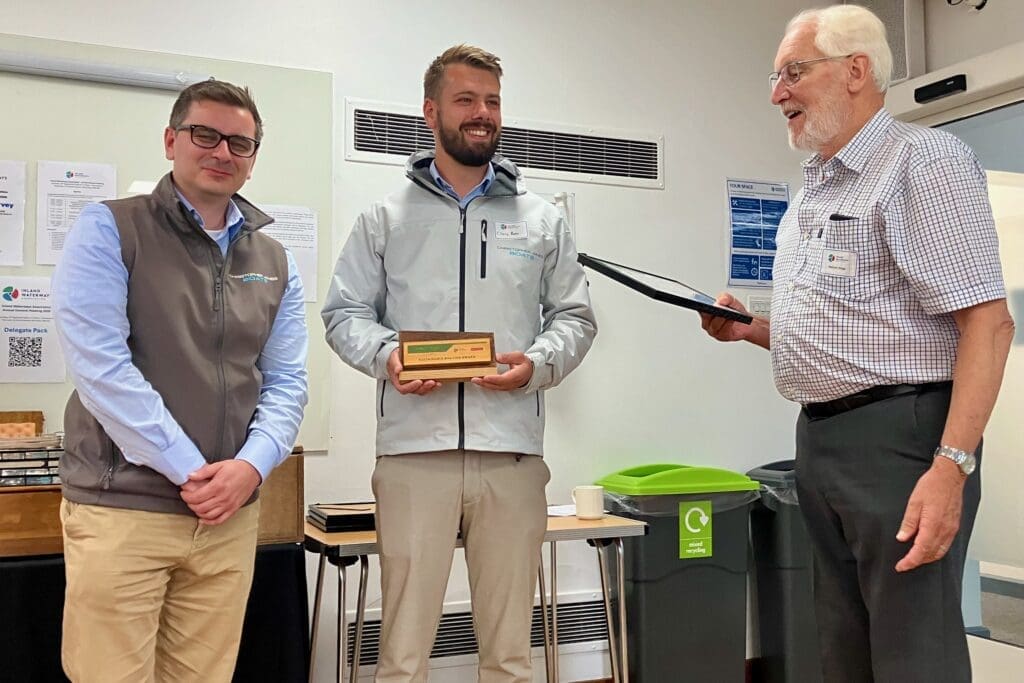
This is the third year that the Towpath Talk/Inland Waterways Association Sustainable Boating Awards have been presented, writes the IWA Sustainable Boating Group’s Jonathan Mosse, and it is both intriguing and gratifying to note that the winners are all drawn from outside the usual suspects.
PAST recipients have been equally deserving, though predictable in that they were predominantly participants in the mainstream inland waterway’s scene.
Enjoy more Towpath Talk reading every month.
Click here to subscribe & save.
This year’s Commercial Award went to Landamores Ltd ‘for being the leading constructors, converters and maintainers of electric boats on the Broads for some years and introducing sustainable propulsion and other innovations into a very traditional boat building market.’ The award was accepted by one of its agents, Chris Bow, the director of Christopher James Boats, which is based on the Thames.
Crossover between the Broads and other inland waterways navigations has always been somewhat limited, which is unfortunate from the point of view of sustainability as they have been the undoubted leaders in electric propulsion for many years.
On a recent visit by the IWA Sustainable Boating Group, we were impressed by the range of sustainability initiatives from both the Broads Authority itself and a diversity of private businesses.
The Non-Commercial Award was picked up by Fulham Reach Boat Club, the citation reading ‘for undertaking a range of environmental and sustainability initiatives, including introducing electrically propelled coaching and safety boats, running a water quality testing programme and organising river clean-ups.’
This represents a broad spectrum of water-focused, sustainability initiatives that improve the environment, both for the wider local benefit as well as for the boat club participants themselves. The fact that it all takes place on an urban, tidal, arterial waterway adds yet another dimension.
The final award, a Certificate of Commendation, went to Circular Revolution Co-op ‘for pioneering the collection and disposal of solid waste from separator toilets on boats.’
Both a highly original concept – and highly necessary! Astronomical rents have driven many working and living in London to become moorers, and numbers now far outstrip the availability of basic facilities, including pump-outs and Elsan disposal. The use of separator toilets is an obvious solution, but an urban environment pretty much excludes taking the process on to the next stage of composting.
The company’s model is built upon an innovative circular sanitation service model that provides access to safe sanitation as well as transforming faecal waste into a valuable environmental resource. Electric cargo bikes are used to collect dry material from boaters on a fortnightly or monthly basis, and the waste is then transformed into a useful soil conditioner.
So, this year’s recipients are clearly drawn from a very diverse area of operation demonstrating that, as it develops, sustainability on the inland waterways can take on a myriad of different forms and doesn’t simply have to be limited to propulsion and domesticity.