Wind-powered merchant shipping has moved from theory to reality, offering a compelling demonstration of how global freight transport can dramatically reduce its carbon footprint. While the direct use of wind power is not suitable for inland waterways, the principles behind it point clearly towards the future of low-carbon freight on canals and rivers.

A landmark example is the recently launched Neoliner Origin, which has completed her inaugural two-week voyage from France to the United States. Carrying 1,204 tonnes of mixed cargo, the vessel is equipped with two semi-rigid carbon and fibreglass sails, supported by a diesel-electric drive system. Together, these technologies allow the ship to reduce greenhouse gas emissions by up to 80% per voyage.
This is significant when placed in a global context. Around 80% of world trade by volume is transported by ship, a sector responsible for more than 3% of total global emissions. Much of this pollution comes from the use of heavy fuel oil — a dense, high-carbon residue left over from the oil-refining process.
Despite early challenges, including sail damage caused by hurricane-force winds off the French coast, Neoliner Origin successfully completed her maiden voyage. Her cargo included eight Renault hybrid cars, 500,000 bottles of Hennessy cognac, several containers of refrigerated brioche, and twelve forklifts, arriving in Baltimore just one day behind schedule.
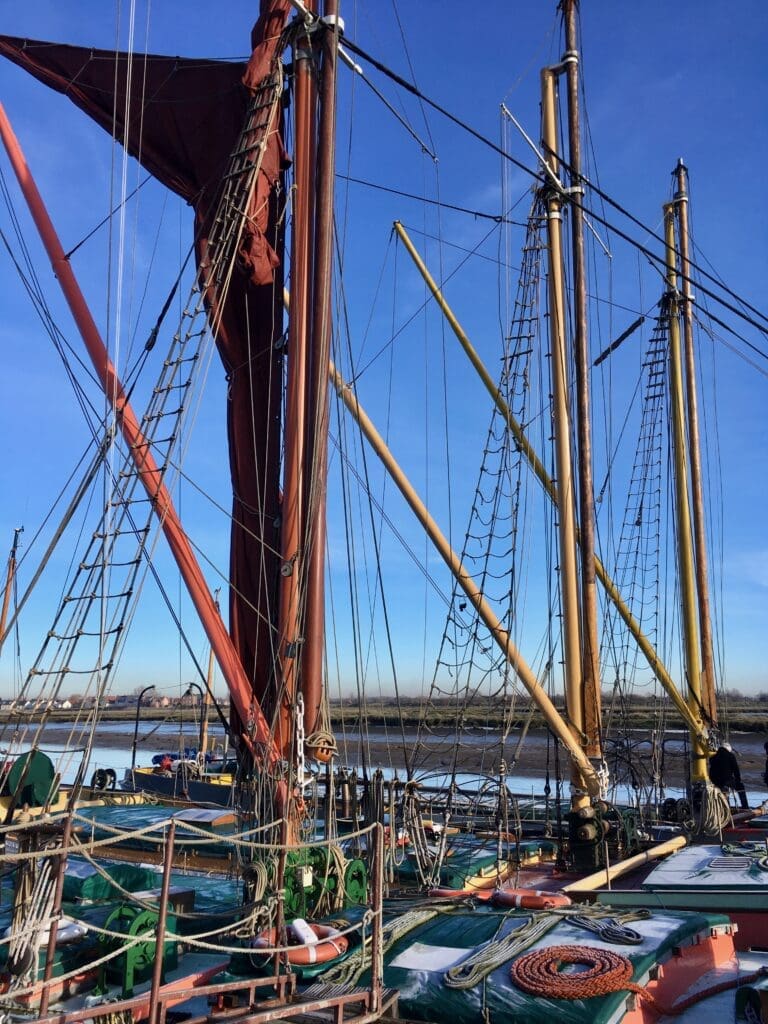
Wind and solar power are increasingly recognised as the key renewable sources capable of reducing dependence on fossil fuels. While wind-assisted propulsion works well on the open ocean, it is clearly impractical on inland waterways, where low bridges, confined channels and winding routes make traditional sails impossible.
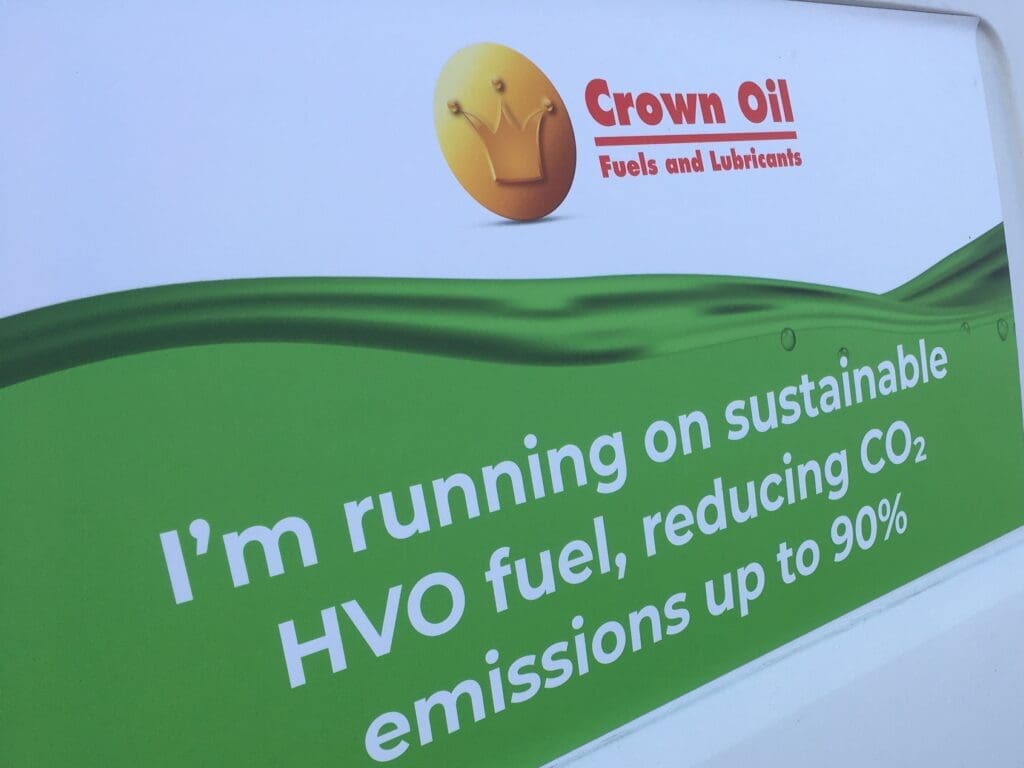
Instead, the contribution of renewables to inland freight must come through energy conversion. Wind and solar energy can be transformed into electricity, hydrogen, or biofuels such as HVO (hydrotreated vegetable oil). The efficiency of these pathways varies significantly.

Modern solar panels convert just over 20% of incoming solar energy into electricity, while offshore wind turbines can achieve conversion efficiencies of up to 50%. In real-world conditions, however, turbines typically operate at 40–50% of maximum capacity. Even so, electricity transmission losses remain relatively low: around 3% on high-voltage networks and approximately 6% on local low-voltage distribution, resulting in total losses of under 10%.
Hydrogen is often presented as an attractive alternative because it produces zero emissions at the point of use and can be used in conventional internal combustion engines. However, when production inefficiencies, transport, and storage losses are taken into account, only around 20% of the original electrical energy used to create hydrogen reaches the point of consumption. In most cases, using electricity directly is far more efficient.
These realities shape the debate around decarbonising freight on inland waterways — a topic recently examined by the Department for Transport in its Call for Evidence. In the short to medium term, the most practical solution is the continued use of the existing vessel fleet running on transition biofuels such as HVO, which require no capital investment in new engines and offer around 90% carbon neutrality.
Full conversion to electric propulsion is difficult to justify on a life-cycle basis, as it would discard diesel engines whose embodied carbon has already been incurred. Converting those engines to hydrogen power faces the same efficiency and infrastructure challenges associated with hydrogen production and distribution.
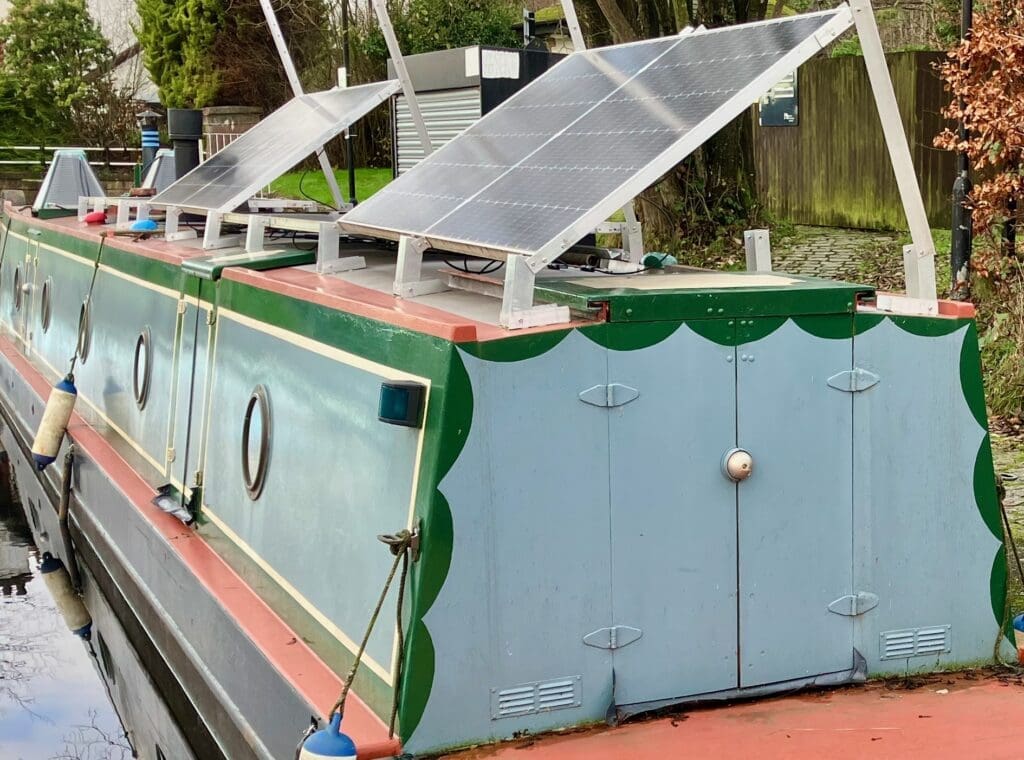
In the longer term, decarbonisation of inland waterway freight will rely on renewable electricity used directly, generated primarily by wind and solar power. While the sails of ocean-going vessels may not appear on canals and rivers, the energy that drives their successors will still be shaped by the wind — captured not by canvas, but by the turning blades of turbines.
Original article was written by Jonathan Mosse.