One of Scotland’s most recognisable historic crossings, the Spey Viaduct, has partially collapsed into the river below after standing for more than 139 years.
Also known as Garmouth Viaduct, the structure was completed in 1886 to carry the Great North of Scotland Railway’s Moray Coast line between Portsoy and Elgin. The viaduct spans 950ft, comprising nine arches, including a striking 350ft wrought-iron lattice bow girder over the main channel of the River Spey near Garmouth in Moray.
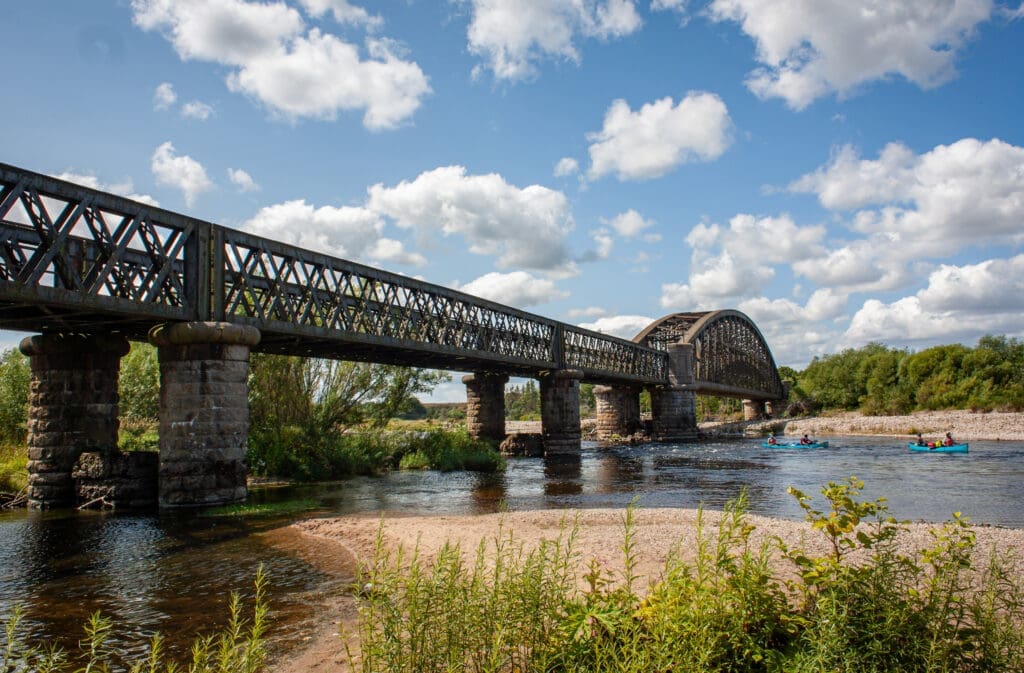
Following a partial collapse in mid-December, the viaduct was immediately cordoned off. The incident left one of the stone supporting piers leaning at an angle, with sections of the iron structure twisted and fallen into the river.
From railway landmark to active travel route
After the railway closed in 1971 and the tracks were removed, the viaduct was deemed too costly and dangerous to dismantle. Instead, it was later paved and repurposed as part of the National Cycle Network Route 1 (NCN1), becoming a popular route for walkers and cyclists.
In recent years, the structure has been maintained by Moray Council solely as a footbridge, providing an important crossing between Garmouth and Spey Bay.
Cause of the collapse
In a statement, Moray Council confirmed that engineers believe the collapse was caused by scour, a process where fast-flowing water erodes material around bridge foundations.
The council said that during the last specialist scour inspection in 2023, there was no evidence of erosion. However, it now appears that changes in the river’s flow path over the past year may have altered the impact on the piers, leading to the failure.
Engineers have confirmed there is no immediate solution to make the structure safe enough to reopen.
Complex and hazardous recovery ahead
The council warned that specialist contractors will be required to carry out both the clean-up operation and detailed assessments of the structure. As the viaduct crosses the fastest-flowing river in Scotland, accessing underwater areas is considered dangerous and will require specialist equipment.
Any initial work will depend on the availability of funding and specialist resources, and no timescale has yet been given for next steps.
A river of national importance
The River Spey, which stretches 107 miles, is the ninth-longest river in the UK and is internationally renowned for salmon fishing and its role in Scotch whisky production. The collapse has therefore raised wider concerns about safety, access and the long-term future of the historic crossing.
For now, the loss of the viaduct marks a significant moment for local communities, active travel users and heritage enthusiasts alike.